Fascial Therapy: Inside the Method Transforming Modern Manual Therapy
Fascial Therapy is changing the way practitioners think about touch, movement, and the body’s capacity to heal. Rooted in decades of clinical research and hands-on experience, it blends science, sensitivity, and somatic awareness into one integrated approach.
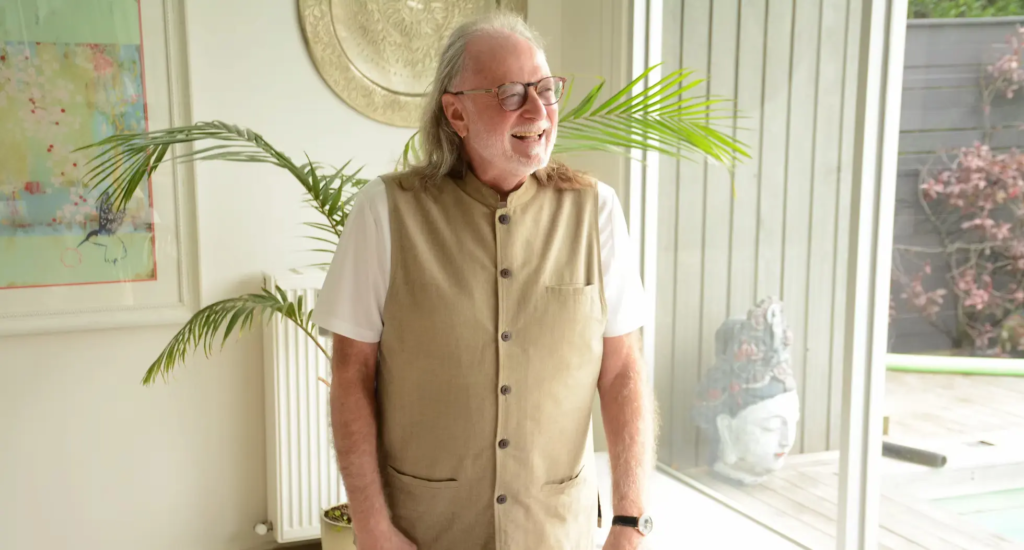
At the forefront of this work is Steven Goldstein, founder of the Fascial Therapy Institute Australia (FTIA). With over 40 years of experience and a teaching career spanning four continents, Goldstein has become a global voice in the evolution of fascial and neurofascial work.
What Is Fascial Therapy?
Fascial Therapy is an integrative approach to manual therapy that focuses on the body’s fascial network — the connective tissue that supports and communicates with every muscle, bone, nerve, and organ. Unlike traditional massage or deep-tissue methods, Fascial Therapy emphasizes gentle, intelligent touch designed to engage the nervous system as much as the muscles themselves.
This style of therapy views the body as an interconnected system, where physical, emotional, and energetic patterns all influence wellbeing. It’s not just about releasing tissue tension — it’s about restoring the body’s natural balance, improving mobility, and calming the autonomic nervous system.
The Evolution of Fascial Therapy
The method developed organically through Goldstein’s long career in bodywork and education. His journey began in the 1990s with Integrative Fascial Release (IFR), which evolved into Integrative Soft-Tissue Release (ISTR) in the 2000s, and later into the more refined and holistic Fascial Therapy (FT) by 2015.
Today, the FTIA’s courses are recognized internationally for combining modern fascial research with practical, hands-on application. Goldstein’s teaching draws on anatomy, physiology, and Polyvagal Theory, creating a trauma-informed, nervous-system-aware approach to touch.
Over the decades, he has taught practitioners across Australia, the UK, Europe, India, South Africa, Canada, and New Zealand, shaping a generation of therapists interested in subtle, responsive bodywork.
The Philosophy: Gentle Touch, Profound Change
Fascial Therapy operates on the principle that less is often more. Instead of using force to manipulate tissue, practitioners learn to listen to the body’s responses — using light, precise contact to encourage self-correction within the fascial matrix.
This process involves an understanding of:
- The autonomic nervous system, and how touch can help shift the body out of defensive or stress states.
- Interoception, or the body’s internal sense of itself.
- Polyvagal awareness, where safe, attuned touch helps regulate the nervous system.
- Emotional release and integration, which may occur naturally as fascial restrictions ease.
In this work, touch becomes communication. Rather than imposing change, practitioners support the body’s innate intelligence to reorganize itself from within.
Fascial Therapy Institute Australia: Courses and Pathways
The FTIA offers a progressive series of workshops that guide practitioners from foundational principles to advanced neurofascial and energetic methods. Each course builds on the last, developing both technical skill and tactile sensitivity.
FT1: Foundations
A four-day introduction covering:
- Myofascial anatomy and global fascial lines
- The principles of Two-Point and Stacking techniques
- Mobility, stability, and the fascial continuum
- Regulation of the autonomic nervous system through touch
FT2: Neurofascial Mobilisation
Explores the intersection of fascia and nerve pathways, teaching neural glide and neurodynamic release techniques for pain-free movement.
FT3: Spine, Scapula & Thorax
Applies fascial principles to spinal and thoracic mobility. Students learn to assess and balance motion patterns while improving postural integration.
FT4 & FT5: Deep Front Line and Psoas
A deep exploration of the body’s core fascial line — from the soles of the feet to the cranial base — with special attention to breath, psoas function, and internal balance.
FT10: Biofield Therapy
Moves beyond the physical layer, integrating energy work and resonance-based techniques such as tuning forks, vibration, and field awareness.
FT11: Polyvagal Theory, Touch & Manual Therapy
An advanced module connecting touch to co-regulation, trauma awareness, and the therapeutic use of presence and safety.
Each training is designed for massage therapists, osteopaths, physiotherapists, chiropractors, and manual therapists seeking to expand their clinical understanding and somatic skill.
Why Practitioners Choose Fascial Therapy
Practitioners are drawn to Fascial Therapy for its balance of science and intuition. It respects the latest research in fascia and neurophysiology while valuing the subtle art of touch that can’t be measured by technique alone.
Participants often report that their practice becomes:
- More effective with less effort
- More connected and intuitive
- More holistic, addressing emotional and energetic aspects of wellbeing
- More trauma-informed, guided by nervous system safety
In a field often dominated by “fixing,” Fascial Therapy teaches how to facilitate healing instead — a shift that can transform both practitioner and client outcomes.
About Steven Goldstein
Steven Goldstein, founder of the Fascial Therapy Institute Australia, holds a Bachelor of Health Science (Musculoskeletal Therapy) and a Bachelor of Arts in Education. With over 40 years of clinical experience, he has lectured nationally and internationally, served as an academic leader in massage education, and received multiple recognitions, including nomination for the Ashley Montague Award for Outstanding Contributions to Massage Therapy.
His teaching blends evidence-based science with human connection — empowering practitioners to bring intelligence, empathy, and artistry to their touch.
The Future of Fascial Therapy
As understanding of fascia deepens through research and somatic science, the work continues to evolve. The Fascial Therapy Institute Australia remains at the forefront of this evolution — uniting movement science, neuroscience, and mindful touch into a cohesive model of healing.
“Movement dictates the way we live — all day, every day — and at FTIA, we take that very seriously.”
To learn more about upcoming workshops and training opportunities, visit fascialtherapy.net or contact [email protected].