Understanding the Functional Movement System (FMS): How It Redefined Movement Screening

In fitness and rehabilitation, understanding how the body moves is as important as building strength or endurance. The Functional Movement System (FMS) was developed to address this need — to evaluate the quality of movement, not just its quantity. Used by trainers, coaches, and healthcare professionals around the world, FMS offers a structured way to observe, score, and improve movement patterns across a range of abilities.
How FMS Began
The Functional Movement System was co-founded in the 1990s by Gray Cook, a physical therapist, and his colleagues in southern Virginia. Working with both athletes and rehabilitation patients, they noticed a consistent problem: people often returned to activity without addressing the poor movement patterns that had led to injury in the first place.
Cook’s goal was to develop a simple, standardized method to evaluate how people move — one that could highlight weaknesses, asymmetries, and inefficiencies before they caused problems. His early sketches of movement patterns eventually became the foundation of what is now known as the Functional Movement Screen.
Initially used with local athletes, the system quickly gained attention from professional sports organizations and the U.S. military. Over time, it evolved into a widely recognized assessment method that bridges the gap between healthcare and performance training.
What the Functional Movement System Measures
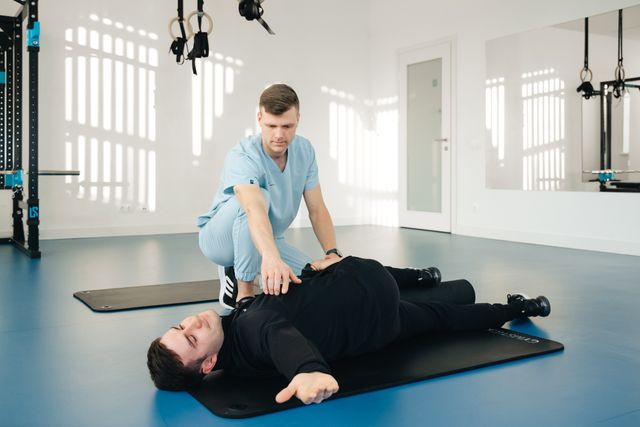
The Functional Movement Screen (FMS) is a tool designed to identify limitations and imbalances in basic movement patterns. Unlike traditional strength or flexibility tests, it looks at how different parts of the body work together during fundamental motions such as squatting, lunging, stepping, or reaching.
Each movement is scored according to a simple numerical system that reflects quality and control rather than speed or power. The aim is not to diagnose injury but to establish a baseline — showing where mobility, stability, or coordination may be restricted.
An FMS takes roughly 10 minutes to perform and provides information that helps practitioners make better programming decisions. Movements that score well can safely be developed or loaded, while weaker patterns can be protected and corrected before training intensity increases.
Why Movement Screening Matters
Movement screening is now considered an important part of modern fitness and rehabilitation. It helps professionals identify risks before pain or injury occurs, allowing for more targeted training and recovery strategies.
For coaches and trainers, screening helps tailor exercise programs to the individual rather than applying one-size-fits-all routines. For healthcare professionals, it serves as a transitional step between rehabilitation and a full return to activity — ensuring that patients are not just pain-free but also moving efficiently.
The FMS approach emphasizes that movement quality underlies all forms of physical performance. Strength, speed, and endurance all depend on how well the body’s systems coordinate fundamental patterns.
Inside the FMS Level 1 Course
The FMS Level 1 course introduces participants to the philosophy and principles behind movement screening. It focuses on understanding how mobility, stability, and motor control interact to produce functional movement.
Key learning outcomes include:
- Understanding the purpose and principles of movement screening
- Learning the standardized instructions and scoring procedures for the FMS
- Identifying common movement errors and compensations
- Using screening results to inform training or rehabilitation strategies
The course is open to both fitness and healthcare professionals and forms the foundation for further study in the FMS system. Later levels, such as FMS Level 2 and the Fundamental Capacity Screen (FCS), build on these concepts by addressing corrective strategies and higher-level performance testing.
A System Built on Practical Insight
One reason FMS has remained influential is its practicality. It does not require advanced equipment or laboratory testing — only a consistent approach to observing movement. This simplicity makes it accessible across disciplines, from physical therapy to athletic training and personal coaching.
Since its creation, the FMS has been incorporated into professional sports teams, military programs, and clinical practices around the world. It represents a shared framework for discussing and improving movement, no matter the context.
The Broader Idea: Move Well, Then Move Often
At the heart of the Functional Movement System is a simple philosophy: before adding strength, speed, or endurance, it’s essential to ensure the body moves well. Poor movement patterns can lead to inefficiency, discomfort, or injury — problems that no amount of training can fix without first addressing the root cause.
The FMS provides a structured way to observe how the body moves and to use that information to make more informed decisions about exercise, rehabilitation, and performance. While opinions on its application vary, its core idea has influenced how many professionals think about movement: quality first, then quantity.